
- This event has passed.
Schopenhauer’s Influence
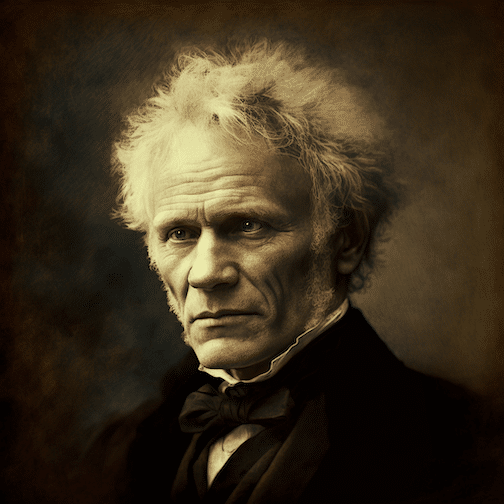
One source of inspiration for Tristan und Isolde was the philosophy of Arthur Schopenhauer, notably his The World as Will and Representation, to which Wagner had been introduced in 1854 by his poet friend Georg Herwegh. Wagner later called this the most important event of his life. His personal circumstances certainly made him an easy convert to what he understood to be Schopenhauer’s philosophy, sometimes categorized as “philosophical pessimism”. He remained an adherent of Schopenhauer for the rest of his life.
Contradictions
One of Schopenhauer’s doctrines was that music held a supreme role in the arts as a direct expression of the world’s essence, namely, blind, impulsive will. This doctrine contradicted Wagner’s view, expressed in “Opera and Drama”, that the music in opera had to be subservient to the drama. Wagner scholars have argued that Schopenhauer’s influence caused Wagner to assign a more commanding role to music in his later operas, including the latter half of the Ring cycle, which he had yet to compose. Aspects of Schopenhauerian doctrine found their way into Wagner’s subsequent libretti.
A discussion with John Doe
In this talk by leading scholar John Doe, we will examine Schopenhauer’s influence on Wagner’s thinking and music. Refreshments will be available and a Q+A will follow the talk.
Venue Details
Saddler’s Hall
40 Gutter LnLondon, EC2V 6BR United Kingdom